A general view of the second aid convoy sent by the Syrian Red Crescent to the southern province of Suwayda to meet humanitarian needs on the provincial border of Suwayda, Syria on July 23, 2025. [Stringer – Anadolu Agency]
Access to humanitarian assistance remains one of the most urgent challenges in armed conflicts across Africa. From Ethiopia and Sudan to the Sahel region, civilians continue to face severe restrictions on life-saving aid. While international humanitarian law (IHL), reflected in the Geneva Conventions and their Additional Protocols, provides the primary legal framework regulating armed conflict, it does not always guarantee effective humanitarian access as humanitarian relief operations are often dependent on state consent.[1]
Recent warnings from the International Committee of the Red Cross (ICRC) in its Humanitarian Outlook 2026 highlight the severity of restricted humanitarian access in conflicts zones such as El Fasher, Sudan. The report further notes increasing attacks on aid and healthcare workers and the growing militarisation of humanitarian assistance.
Against this background, International Human Rights Law (IHRL) may provide an important complementary framework to IHL. By imposing continuous obligations on states to protect life, dignity, and essential socio-economic rights, IHRL can reinforce humanitarian protections where the implementation and enforcement of IHL alone proves insufficient, particularly when state consent is used to restrict access.
The Limits of IHL: Consent and Humanitarian Access
IHL is designed to regulateconduct during armed conflict. It operates on the principle that even in war, there are legal limits. Importantly, IHL applies equally to all parties to a conflict, regardless of whether their use of force is lawful under the United Nations Charter system. However, when it comes to humanitarian assistance, the legal position under IHL becomes more complex. In non-international armed conflicts (NIACs), which are common across Africa, the delivery of humanitarian aid is generally subject to state consent. This creates a significant limitation. States may delay, restrict, or deny access to humanitarian organisations, often citing sovereignty or security concerns. Although consent should not be withheld arbitrarily, limited effectiveness of existing enforcement mechanisms means that restrictions on humanitarian assistance frequently persist. This is therefore not only a moral concern, but also a legal problem linked to accountability under international law.
OCHA Ukraine, A convoy delivers aid to Dobropillia village in Ukraine’s Zaporizhzhia region 3 February 2023
At the same time, modern conflicts are becoming longer and more fragmented, and increasingly fought in populatedcivilian areas. Around 204 million people now live in territories under the full or contested control of armed groups, often beyond the reach of state institutions and humanitarian protection. In many conflicts, civilians remain trapped by insecurity, shifting front lines, and blocked humanitarian corridors. The ICRC further warns that dehumanising narratives, misinformation, and “might makes right” approaches are undermining respect for international law and restricting neutral humanitarian assistance. This raises the question: if IHL aims to protect civilians, why does it still allow states to restrict access to life-saving aid?
IHRL as a Complementary Framework
IHRL offers an important pathway to strengthen humanitarian protection. Unlike IHL, IHRL places ongoing obligationson states to protect individuals under their jurisdiction. Several human rights are directly connected to humanitarian assistance, including the right to life and the rights to food, water, and health. The UN Human Rights Committee in General Comment 36 has clarified that the right to life requires states to take positive measures to ensure access to basic necessities. Similarly, the Committee on Economic, Social and Cultural Rights in General Comment 14 has emphasised that the right to health includes access to conditions for a dignified life, including water, sanitation, housing and medical care. Importantly, these obligations do not disappear during armed conflict. In such situations international jurisprudencehas confirmed that IHRL continues to apply alongside IHL.
This overlap is important because it means humanitarian access cannot be treated purely as a political or discretionary matter relying on state consent under IHL, but is increasingly tied to legally protected human rights obligations.
Reinforcing Humanitarian Access through IHRL
IHRL can strengthen humanitarian access in at least three important ways. First, it limits the discretion of states, as IHRL constrains state authority through the protection of individual rights. While IHL allows states to decide whether to grant consent for humanitarian relief, IHRL requires that state decisions do not result in violations of fundamental rights. Refusing access to food, water, or medical supplies in a manner that leads to starvation or preventable deaths could therefore violate the right to life.
Second, IHRL introduces standards of proportionality and necessity into state decision-making. Even where security concerns exist, restrictions on humanitarian assistance must be justified and cannot be excessive. This creates a higher threshold for denying aid. States cannot rely on vague claims of sovereignty or security to impose blanket restrictions on aid delivery. This creates a higher legal threshold for denying aid and strengthens protection for civilians affected by armed conflict.
Third, IHRL offers additional accountability mechanisms beyond those traditionally available under IHL. Regional institutions such as the African Commission and the African Court on Human and Peoples’ Rights have addressed issues connected to access to essential services during crises. In SERAC v Nigeria, the Commission held that failures relating to food and health protections violated human rights obligations. More recently, the case of Democratic Republic of Congo v Rwanda, demonstrates that the Court can serve as a regional judicial mechanism for addressing alleged human rights violations arising from armed conflict.
IHRL therefore operates not only as a legal framework, but also as a moral safeguard capable of reinforcing civilian protection where IHL alone proves inadequate.
NADAPAL, June 10, 2020 (Xinhua/Denis Elamu) — Photo taken on June 9, 2020 shows trucks carrying emergency food at the Nadapal border point, south west of Kapoeta East County, South Sudan.
Humanitarian needs continue to rise while humanitarian action remains underfunded: global military spending reached 2.7 trillion US dollars in 2024 compared to only 50 billion dollars requested for humanitarian appeals. This imbalance is particularly significant for Africa, where humanitarian organisations already struggle with insecurity, underfunding, and blocked access routes. Yet these challenges do not reduce the importance of IHRL. Instead, they demonstrate the need for stronger integration between IHL and IHRL in legal practice, humanitarian policy, and international accountability mechanisms.
Conclusion
IHL regulates armed conflict but does not always guarantee effective humanitarian access, particularly in NIACs where state consent can restrict relief operations. Recent findings show increasing restrictions on aid delivery, attacks on humanitarian personnel, and the growing politicisation of humanitarian assistance. IHRL helps strengthen this gap by reinforcing states’ obligations to protect life, health, and dignity, offering a stronger framework for civilian protection during armed conflict.
[1] Consent is expressly required under Additional Protocol II, Article 18(2), which refers to the consent of the High Contracting Party, and under Additional Protocol I, Article 70(1), which requires the consent of the parties to the conflict, understood in the context of an international armed conflict to mean States. The ICRC’s study on customary international humanitarian law likewise recognises the requirement of State consent as a rule of customary IHL.
Thelma Chinyamurindi
Thelma Chinyamurindi is an early-career legal scholar and doctoral candidate at the South African Research Chair in International Law, University of Johannesburg. Her research focuses on humanitarian assistance in non-international armed conflicts, with particular emphasis on the legal and operational constraints surrounding state consent and humanitarian access. She also examines the relationship between international humanitarian law (IHL) and international human rights law (IHRL), engaging broader debates on civilian protection, sovereignty, and accountability. Her work aligns with Sustainable Development Goals (SDGs) 16, 2, and 3, particularly through its focus on access to food and medical assistance in conflict settings.
Algerian President Abdelaziz Bouteflika (C) stands between Eritrean President Isayas Afewerki (L) and Ethiopian Prime Minister Meles Zenawi (R) after signing peace agreements in Algiers December 12, 2000
1.The Ethio-Eritrean War – A brief background
The Ethio–Eritrean War (1998–2000) emerged from a longstanding border dispute that dramatically intensified following Eritrea’s declaration of independence from Ethiopia in 1993. The dispute over the Badme region, which had simmered for decades as a consequence of colonial and postcolonial contestations over borders, natural resources, and national identity, ultimately served as the ignition point for hostilities, exposing a profound legal quandary: What happens when a newly formed state has not yet acceded to central treaties of international humanitarian law? In particular, was Eritrea, an entity that did not formally ratify the Geneva Conventions until August 14, 2000, bound to safeguard Ethiopian prisoners of war under those same Conventions prior to accession?
After gaining independence in 1993, Eritrea and Ethiopia experienced escalating tensions over the disputed Badme region. These tensions culminated in armed clashes in May 1998, leading to a full-scale war that lasted until June 2000. The conflict resulted in extensive casualties, economic disruption, and severe humanitarian consequences for both nations. In an effort to resolve the dispute, both countries signed the Algiers Agreement in December 2000, establishing the Eritrea-Ethiopia Boundary Commission (EEBC) to deliver a final and binding border delimitation. In April 2002, the EEBC awarded the disputed town of Badme to Eritrea. However, Ethiopia expressed deep dissatisfaction with this ruling and refused to implement the decision, maintaining control over Badme. This refusal led to a prolonged stalemate between the two nations.
2.The place of International Humanitarian Law
Ethiopia, having signed and ratified the Geneva Conventions by 1949 and 1969 respectively, was unambiguously bound by these multilateral treaties, which provide a comprehensive legal framework regulating the conduct of hostilities and the treatment of persons who are not, or are no longer, participating in hostilities. In contrast, when Eritrea declared its independence in 1993, it did not automatically inherit these treaty obligations from Ethiopia. International law recognizes that newly independent states customarily signal their intent to adopt pre‑existing treaty commitments through formal declarations or legislative enactments. While many successor states continue to honor international treaties, this is not automatic. In the case of Eritrea, there is a notable absence of clear legislative or formal declarations indicating that it intended to adopt the Geneva Conventions immediately upon independence. The Eritrea–Ethiopia Claims Commission explicitly observed a “dearth of substantiating evidence” that Eritrea had undertaken the customary process necessary to inherit these obligations. As the Commission observed:
“However, the Commission has not been shown evidence that would permit it to find that such circumstances here, desirable though such succession would be as a general matter.”
In this context, “such circumstances” refer to the lack of unequivocal statements from Eritrean authorities and the absence of consistent state practice that would indicate a clear intention to be bound by the Geneva Conventions. This absence of demonstrable consent renders any presumption of automatic succession legally unsustainable.
To fully understand Eritrea’s obligations during the conflict period, it is essential to examine the broader principle of continuity in humanitarian obligations under international law, particularly in the context of state succession, where shifts in sovereignty or government structures raise complex questions about treaty obligations. According to this principle, certain international obligations, especially those related to fundamental human rights and humanitarian norms, persist despite changes in state sovereignty. This continuity ensures that newly independent or successor states remain accountable for essential commitments that uphold human dignity and the rule of law within the international community.
While the Vienna Convention on Succession of States in Respect of Treaties adopts a permissive approach under Article 16, often referred to as the “clean slate” doctrine, this framework is increasingly challenged when it comes to humanitarian obligations. The “clean slate” doctrine allows newly independent states to decide which treaties they will adopt, potentially enabling them to reject critical human rights obligations inherited from their predecessors. However, this permissive approach conflicts with the evolving understanding in international law that certain humanitarian obligations, particularly those embedded in customary international law, remain binding regardless of succession.
In his article, “The Problem of State Succession and the Identity of States under International Law”Matthew Craven argues that the continuity of obligations cannot be assessed solely through the lens of consent-based treaty succession. Instead, it must be viewed through the prism of an emerging constitutionalization of international law, where certain values—notably the prohibition of torture and genocide—function as normative anchors that transcend state will. Craven’s argument highlights that humanitarian norms are increasingly perceived as structural principles essential to the integrity of the international legal order, rather than optional commitments dependent on state consent.
“The principles underlying the prohibition of the use of force, the non-intervention principle, and the minimum standards of humanity form part of customary international law and constitute obligations erga omnes.”
The reference to “minimum standards of humanity” is particularly significant because it directly relates to the continuity of humanitarian obligations. These standards represent fundamental norms that persist irrespective of a state’s treaty commitments or changes in sovereignty. The erga omnes nature of such obligations means that they bind all states at all times, not because of treaty commitments, but because they are integral to the collective interests of the international community. Obligations erga omnes are distinct in that they protect global values, such as the prohibition of torture and inhumane treatment, which are considered essential for maintaining international order.
An Eritrean soldier at his post in Serha, Eritrea Photo Credit: Associated Press
In the context of state succession, this implies that successor states cannot evade responsibilities concerning core humanitarian principles by simply rejecting predecessor treaties. Instead, these obligations remain continuous and binding, regardless of political transformations. This continuity is grounded in the universal values that these humanitarian norms protect—values that safeguard the integrity of the international legal order and ensure that fundamental human rights are upheld even in the face of sovereign transitions.
From the moment of independence, Eritrean leadership made it clear through official pronouncements and consistent state behavior that it would not be bound by the Geneva Conventions until a later accession occurred. In particular, Eritrea’s persistent denial of unrestricted access to the International Committee of the Red for the purpose of visiting Ethiopian prisoners of war serves as a concrete manifestation of its non‑acceptance of the treaty regime. While the ICRC was allowed limited access—to a small group of civilian detainees according to stringent procedures—broader access for inspecting POWs was consistently obstructed. These obstructions reflect both a deliberate policy of noncompliance with the treaty’s procedural requirements and a rejection of the substantive humanitarian obligations that the treaty is designed to enforce.
In its Partial Award on Prisoners of War, the EECC concluded that Eritrea’s systematic refusal to grant ICRC access to POWs from May 1998 until August 2000 violated customary international humanitarian law (IHL), despite its non-accession to the Geneva Conventions at the time (para.62). The Commission’s findings, based on extensive fact-finding—including POW testimonies, Eritrean military directives, and diplomatic exchanges—revealed a deliberate and prolonged obstruction of humanitarian oversight (para. 55). Eritrea argued that the obligation to allow ICRC visits was a procedural rule tied solely to treaty law rather than a binding customary obligation (para. 56–58). However, the Commission firmly rejected this claim, affirming that external humanitarian access is an essential safeguard under customary international law and a fundamental protection against inhumane treatment (para. 59–61). It ruled that Eritrea violated its obligations under customary IHL from May 1998 to August 2000, as the denial of ICRC access deprived POWs of independent registration, monitoring, and relief (para. 62).
A central issue raised by these circumstances is whether, in the absence of formal accession, a state such as Eritrea may still be held accountable under customary international law. Customary IHL is a body of legal norms that derives its binding nature from consistent state practice accompanied by the recognition that such practices are obligatory (opinio juris). In the Ethio‑Eritrean conflict, even though Eritrea had not formally acceded to the Geneva Conventions, the core principles—such as the requirement to treat prisoners of war humanely—had already crystallized into customary international law.
The International Criminal Tribunal for the Former Yugoslavia further substantiated the binding nature of POW protections in Prosecutor v. Tadić, where the Appeals Chamber held that “certain fundamental humanitarian obligations are to be observed by all parties to an armed conflict, regardless of whether they have ratified the conventions that contain them.” The ICTY’s ruling in Furundžija similarly affirmed that the prohibition of torture and inhumane treatment is a peremptory norm (jus cogens) from which no derogation is permitted, binding states irrespective of treaty obligations.
In Al-Skeini and Others v. the United Kingdom, the European Court of Human Rights addressed the extraterritorial application of the European Convention on Human Rights. The Court held that the United Kingdom exercised authority and control over individuals in Basrah, Iraq, during security operations, thereby establishing a jurisdictional link under Article 1 of the Convention. Specifically, in paragraph 149, the Court stated:
“In these exceptional circumstances, the Court considers that the United Kingdom, through its soldiers engaged in security operations in Basrah during the period in question, exercised authority and control over individuals killed in the course of such security operations, so as to establish a jurisdictional link between the deceased and the United Kingdom for the purposes of Article 1 of the Convention.”
From this decision, it can be established that control over individuals, particularly in conflict situations, constitutes a sufficient basis for activating fundamental humanitarian obligations, as the exercise of such control creates a legal relationship that imposes responsibilities recognized under customary international humanitarian law. In the case of Eritrea, its authority over Ethiopian prisoners of war during hostilities necessarily triggered obligations not contingent upon formal treaty commitments, specifically the duty to ensure humane treatment and to facilitate humanitarian oversight, thereby guaranteeing that essential humanitarian standards are maintained through the very nature of jurisdictional control.
The African Commission on Human and Peoples’ Rights (ACHPR) has ruled that incommunicado detention constitutes a severe human rights violation, facilitating further abuses such as torture and ill-treatment. In Communication No. 250/2002, the Commission stated that “the lack of external oversight in detention facilities constitutes an inherent violation of human dignity and is incompatible with international human rights and humanitarian standards.
Additionally, the ICRC’s Customary IHL Study, which codifies state practice, identifies Rule 124, stating that “the ICRC must be granted regular access to all persons deprived of their liberty in order to verify the conditions of their detention and to restore contacts between those persons and their families.” This obligation, the study finds, is “established as a rule of customary international law applicable in both international and non-international armed conflicts.”
Eritrea’s conduct during the war provides concrete evidence for this analysis. The repeated denial of full ICRC access to POWs is not merely a technical or administrative shortcoming; it signifies a broader repudiation of the international standards of humane treatment that the Geneva Conventions are designed to enforce. Such conduct, when viewed through the lens of customary IHL, clearly demonstrates that Eritrea’s actions violated universally binding humanitarian norms, even if formal treaty obligations were not in place at the time.
Permanent Court of Arbitration Eritrea-Ethiopia Claims Commission – The Hague, Netherlands, 2000
A contentious yet crucial aspect of the Eritrea–Ethiopia Claims Commission’s analysis is the role of military training in establishing state obligations under international humanitarian law. In paragraph 67 of the EECC’s Partial Award on Prisoners of War, the Commission noted that Eritrean troops and officers received “extensive instruction on both the fundamental requirements of the Geneva Conventions on the taking of POWs and on the policies and practices of the Eritrean People’s Liberation Front in its struggle against the previous Ethiopian government, the Derg.”
This acknowledgment raises an important question: can comprehensive military training in IHL indicate an implicit commitment to the humanitarian principles enshrined in the Geneva Conventions? On one hand, such training demonstrates Eritrea’s awareness of the conventions’ core principles, suggesting a de facto endorsement of international humanitarian norms. The investment in educating military personnel about these obligations could be interpreted as evidence of the state’s intention to adhere to those standards, even in the absence of formal accession.
However, while the extensive IHL training conducted by Eritrea certainly indicates an operational recognition of international norms, it falls short of constituting formal legal acceptance. Under international law, explicit consent is required for a state to be legally bound by treaty regimes. This consent typically manifests through legislative enactments, executive declarations, or formal treaty accession. Without such explicit actions, a state’s informal practice even those involving comprehensive training cannot substitute for formal acceptance. The EECC emphasized that despite Eritrea’s military training programs aligning with the Geneva Conventions, these efforts alone did not establish a legally binding obligation to comply with the conventions. Customary international law requires consistent state practice accompanied by opinio juris—the belief that such practice is legally required. In Eritrea’s case, while training demonstrated knowledge and operational alignment with humanitarian norms, it did not reflect the necessary belief or intent that these practices were legally binding obligations under international law.
Moreover, the distinction between operational practice and formal legal commitment is essential. Extensive IHL training can contribute to state practice, but without accompanying formal declarations, such practices remain aspirational rather than obligatory. This distinction underscores the principle that state conduct, no matter how aligned with international standards, must be accompanied by explicit consent mechanisms for treaty obligations to be legally enforceable. Consequently, Eritrea’s military training programs, although commendable in reflecting a certain humanitarian ethos, cannot by themselves transform informal practice into binding treaty obligations under the Geneva Conventions.
Eritrea’s subsequent accession on August 14, 2000, in conjunction with its extensive investment in IHL training, might indicate that its leadership tacitly endorsed humanitarian norms even during the conflict period. This is especially true in line with the description in paragraph 67 of the EECC Award and argues that such behavior reflects a de facto commitment that should mitigate the strict legal consequences of non‑accession. However, international law is clear that retrospective behavior, however positive, cannot be used to retroactively impose obligations for a period during which the state did not provide explicit consent. While Eritrea’s later actions may be interpreted as an attempt to align with international norms, they do not alter the legal reality of the conflict period.
2.1 The Binding Force of Customary International Humanitarian Law in State Succession
The broader implications of the Ethio‑Eritrean conflict for IHL are significant. This case exemplifies the dual system by which international law operates: formal treaty obligations among consenting states on one hand and universally binding customary norms on the other. Such a framework is essential in an era when not all states are willing or able to join multilateral treaties in full. The evolution of humanitarian norms from treaty provisions into customary law ensures that fundamental principles—such as the prohibition of inhumane treatment, the right of detainees to protection, and the oversight rights of humanitarian organizations—retain their binding force even in contexts where formal treaties are absent.
This case study also prompts to reevaluate the efficacy of international legal regimes in contemporary conflict scenarios. Non‑signatory states may attempt to evade the obligations of treaties by expressly rejecting formal accession, but the universal applicability of customary IHL provides a critical safety net. Even where political considerations lead a state to distance itself from formal treaty mechanisms, the underlying humanitarian imperatives remain enforceable through consistent state practice and the establishment of legal norms recognized by the international community. Consequently, the Ethio‑Eritrean War and the subsequent EECC decision underscore that the protection of human rights and human dignity in armed conflict cannot be nullified by a state’s non‑acceding status.
Moreover, these legal debates have significant policy implications. International bodies and NGOs have increasingly relied on the dual framework of treaty and customary law to hold states accountable for violations of humanitarian norms. In practice, the continued evolution of customary IHL is evident in the growing number of international tribunals and fact-finding missions that invoke these principles to secure redress for victims. As conflicts evolve and new actors—both state and non-state—emerge on the global stage, the interplay between formal treaty obligations and customary norms will continue to shape international responses to humanitarian crises.
2.2.Legal Consequences and Enforcement Mechanisms for Non-Compliance
From an enforcement standpoint, refusing to accede to key IHL treaties neither negates a state’s responsibility nor immunizes its officials from liability for grave breaches. Indeed, the ill-treatment of prisoners of war—recognized as a “grave breach” under the Geneva Conventions (e.g., Geneva Convention III, Arts. 129–130)—is subject to universal jurisdiction, obliging all states to prosecute or extradite alleged perpetrators. Complementing these domestic efforts, the Statute of the International Criminal Court (Arts. 5, 8, and 12–13) empowers the Court to investigate war crimes, crimes against humanity, and genocide, even absent direct state consent if the United Nations Security Council refers the situation under Chapter VII of the UN Charter. This mechanism was illustrated by Resolutions 827 (1993) and 955 (1994), establishing the International Criminal Tribunals for the former Yugoslavia (ICTY) and Rwanda (ICTR), respectively—both of which held perpetrators criminally liable for egregious IHL violations, irrespective of treaty status. Regionally, the African Commission on Human and Peoples’ Rights, operating under the African Charter (Arts. 45–47), can open inquiries, adopt provisional measures, and coordinate with international mechanisms to address severe human rights abuses, thereby reinforcing that customary norms—particularly those reflecting jus cogens prohibitions like torture—must be observed by all states at all times.
What these complementary systems reveal is that the international legal order refuses to allow non-accession to function as a legal vacuum for atrocities. The duty to “respect and ensure respect” for IHL, enshrined in common Article 1 of the Geneva Conventions, imposes a collective obligation on all states to prevent and halt serious breaches. Thus, the rejection of formal treaty obligations offers no safe haven from IHL’s core prohibitions. In practice, however, these enforcement mechanisms neither operate in isolation nor function automatically. States exercising universal jurisdiction often face political or logistical hurdles in prosecuting foreign nationals for extraterritorial crimes, while the ICC relies on voluntary cooperation for arrests and surrenders.
Nonetheless, such barriers enhances the vital role of multilateral engagement and diplomatic pressure in promoting compliance. For instance, the African Commission’s investigative procedures—strengthened by non-governmental organizations and civil society—facilitate evidence gathering, foster dialogue on adherence, and channel critical information to international bodies. Over time, this interplay between domestic courts, regional institutions, and international tribunals dismantles the premise that non-accession to certain treaties can confer immunity. Instead, it highlights how robust legal frameworks enable the international community to impose meaningful consequences on states or individuals who commit grave breaches.
This article demonstrates that while explicit treaty commitments remain crucial for establishing detailed obligations among states, the fundamental humanitarian norms at the heart of International Humanitarian Law have attained a status that renders them binding on all nations—signatory or not.
Author – Wakjira Tesfaye Beriso
Wakjira Tesfaye Beriso is a former lecturer in law at the University of Gondar. He holds an LL.M. in International Humanitarian Law and Human Rights from the Geneva Academy and an LL.M. in Human Rights Law from the University of Gondar. Wakjira has extensive experience in human rights law, humanitarian law, and international advocacy.
Deadline For Submissions: Before or by 10th July 2024
From 2019 to 2023, Africa has continued to witness a significant rise in active armed conflicts and conflict events. This trend has been particularly pronounced in the Democratic Republic of the Congo (DRC), Ethiopia, Sudan, Nigeria, and the Sahel region (especially Burkina Faso, Niger and Mali), leading to increased spillover effects and heightened humanitarian concerns.[1] Presently, Africa is grappling with an alarming surge in forced displacement, with an estimated 40.4 million individuals, as of June 30 2023, including internally displaced persons, refugees, and asylum seekers.[2] The majority of forcibly displaced individuals originate from countries grappling with conflict, with 14 out of the top 15 nations generating such displacement are facing ongoing conflict[3].
Forced displacement in Africa remains a pressing issue, with millions of individuals displaced from their homes due to armed conflicts across the continent. This complex phenomenon not only underscores the devastating consequences of armed conflict but also highlights the intricate interplay between forced displacement and the perpetuation of conflict dynamics. While armed conflict often serves as a primary catalyst for displacement, it is equally important to recognize displacement as a trigger that can exacerbate existing conflicts and contribute to the emergence of new ones.
The nexus of armed conflicts and forced displacement in Africa was further complicated by the impacts of the COVID-19 pandemic, which has exacerbated factors that drive conflicts and instability. In addition, climate change, recognized as a ‘threat multiplier,’ intensifies competition over scarce resources, contributing to escalating or prolonging conflicts. High rates of youth unemployment are associated with a greater risk of political violence and may drive young people toward violent extremism, subsequently leading to or worsening armed conflicts. Addressing these interconnected challenges is crucial for devising effective strategies to address both forced displacement and armed conflict in Africa.
In connection with this, the Addis Ababa University International Humanitarian Law Clinic aims to understand the issue of forced displacement, and thereby inform policy decisions. Engaging with scholars from various disciplines, the clinic also aims to develop strategies to address challenges of forced displacement and armed conflicts in Africa, potentially creating a platform for collaborative efforts to address challenges faced by African nations in dealing with forced displacement in connection with armed conflicts.
In this vein, the Addis Ababa University International Humanitarian Law Clinic invites submissions for blogpost articles that study the multifaceted relationship between forced displacement and armed conflict in Africa. Authors are encouraged to explore various dimensions of this nexus, considering both the consequences of displacement resulting from armed conflict and the ways in which displacement can fuel or prolong conflicts. Potential areas for exploration include:
Overview of the relationship between armed conflict and forced displacement, highlighting the interconnectedness of these phenomena and their impact on individuals and communities.
Causes of Forced Displacement in Armed Conflict, including violence and insecurity, destruction of infrastructure and livelihoods, human rights violations, and ethnic and religious persecution.Impact of Forced Displacement on Individuals and Communities, examining psychological trauma, loss of social support networks, economic challenges, disruption of education and healthcare access, and the strain on resources of host communities.
Exploration of root causes of migration within conflict contexts, and strategies for addressing underlying drivers of displacement.
Legal frameworks and mobility amidst conflict situations, examining challenges and opportunities for displaced populations.
International Legal Framework for Protecting Displaced Persons in Armed Conflict, encompassing refugee law, international humanitarian law, responsibilities of states and international organizations, and challenges in implementation and enforcement.
Protection mechanisms for individuals fleeing conflict zones, and the efficacy of international legal frameworks in ensuring their rights and safety.
Humanitarian Response to Forced Displacement in Armed Conflict, focusing on the role of humanitarian organizations and agencies, provision of shelter, food, and medical assistance, and protection of vulnerable groups.
Long-Term Solutions to Address Armed Conflict and Forced Displacement, including conflict prevention and resolution strategies, peacebuilding efforts, and sustainable development initiatives in conflict-affected areas:
Strategies to combat irregular migration, migrant smuggling, and trafficking in human beings in conflict-affected regions.
The intersection of climate-induced displacement and armed conflict, and efforts towards climate adaptation and resilience among displaced communities.
Health challenges faced by migrants and refugees in conflict settings, and the need for targeted healthcare interventions.
Sustainable reintegration initiatives for returning migrants and refugees, and the role of readmission and reintegration in post-conflict reconstruction.
Protection of victims of trafficking amidst conflict dynamics, and strategies for preventing exploitation and abuse.
Promotion of free movement and mobility within Africa as a means of enhancing regional cooperation and stability, particularly in conflict-prone areas.
The gender dimension of forced displacement, such as increased risk of gender-based violence, loss of economic opportunities, and disruption of social support networks for women, challenges faced by displaced women including accessing healthcare, particularly reproductive health services and support for survivors of sexual violence.
Case Studies: Examining Specific Examples of Armed Conflict and Forced Displacement, providing in-depth analyses of particular conflicts and their impact on displacement dynamics in Africa.
Other Multidisciplinary topics such as climate change and youth engagement, especially in their relation to the dynamics of forced displacement and armed conflict in Africa.
We look forward to engaging with diverse perspectives and innovative insights on this critical issue facing Africa today.
Submitting Your Blogposts
We welcome original contributions from academics, students and practitioners from a variety of disciplines across Africa. Please submit your blogposts with the length of 1,500 to 2,000 words (except where agreed with the editors) to the following email: ihlclinicaau@gmail.com
During the selection process, priority will be given to innovative blogposts that demonstrate clear potential to contribute to and advance the legal and policy debates in the field of forced displacement and armed conflict in Africa.
On the night of November 4, 2020 Abiy Ahmed (PhD), Prime Minister of Ethiopia reported the news of an attack on the Northern Command of the Ethiopian National Defense Force (ENDF) by the Tigray Peoples Liberation Front (TPLF). He also stated that the ENDF has been ordered to carry out a military offensive. The same night, all communication services (phone, SMS and Internet) were shut down until the mid-December, in what the government continually referred to as a “law enforcement operation”.
Notwithstanding, the facts on the ground show for the purposes of the application of International Humanitarian law, the intensity of the confrontation between the government of Ethiopia and the TPLF as well as the organization of the latter (through what has been referred to as the Tigray Defence Force/TDF), have met the necessary threshold to deem the situation a non-international armed conflict.
After months of various credible reports of the involvement of Eritrean troops in the war in Tigray on the side of the Ethiopian government but denial from both the Ethiopian and Eritrean governments, the Prime Minister has acknowledged their involvement on March 23, 2021. However, the involvement of Eritrea does not change the armed conflict from a non-international armed conflict to an international armed conflict, for the purposes of International Humanitarian Law, as the support of Eritrea is to and with the consent of the Ethiopian government.
It is important to have effective investigations into these credible claims of IHL violation and for the proper application of the law (Guidelines on Investigating Violations of International Humanitarian Law: Law, Policy and Good Practice, Geneva Academy and ICRC, p. 2). For international armed conflicts, treaty laws such as the Geneva Conventions (Art. 49, Art. 50, Art. 129 and Art. 146 of Geneva Conventions I-IV) obliges states to investigate violations. Rule 158 of the Customary International Humanitarian Law Database place an obligation of investigation into possible war crimes in non-international armed conflicts. This obligation can also be found for any killing by the State in International Human Rights law treaties, which continue to apply in situations of armed conflict. (Guidelines on Investigating Violations of International Humanitarian Law: Law, Policy and Good Practice, Geneva Academy and ICRC, p. 4)
Many international organizations, such as the United Nations, have been calling for investigations into the violations. Without physical access to the Tigray region, Amnesty International has undertaken a research on the Axum massacre by interviewing refugees and phone interviews with witnesses and which it corroborated with satellite imagery before the investigation was carried out by the Ethiopian Human Rights Commission. The Bellingcat investigation team and BBC Africa Eye have also used satellite imagery, 3D topographic information and social media to locate the massacre at Mahbere Dego where it was reported that uniformed men led a group of unarmed men to the edge of a cliff, shooting some at point blank range, and pushing dead bodies over the cliff.
However so far, the only organization that has had access to the region for such an investigation is the Ethiopian Human Rights Commission (herein after EHRC). Particularly with regards to the war in Tigray, the Ethiopian Human Rights Commission has only investigated the massacre of civilians in Mai Kadra and Axum, as well as visiting the conditions of suspects detained in connection with the war in Tigray. All other possible violations of IHL have not been investigated. On the 25th of March 2021, the Office of the High Commissioner for Human Rights and the Ethiopian Human Rights Commission have agreed to collaborate on the investigation of the human rights violations and abuses allegedly committed by all parties to the armed conflict in Tigray.
With ethnic polarization at an all-time high in the country, all sides of the armed conflict have been claiming that the reports that incriminate their side are “fake news” in an effort to discredit them. In different cases, the parties to the armed conflict have also refused to co-operate with these organizations (e.g. Amnesty international has stated the lack of response from Ambassador Redwan Hussien Ethiopia’s State Minister for Foreign Affairs and Spokesperson for the Emergency Taskforce in the Ministry of Foreign) (Amnesty International, p. 5)
Impartiality or at least the lack of the perception of impartiality has been a major criticism of the existing investigations. The EHRC in particular has been criticized for lack of impartiality based on its accountability to the Parliament and the nomination for appointment of the chief commissioner by the Prime Minister. There are claims that other international organizations and media have not been able to investigate the potential violations as the government-imposed lockdown in the Tigray region made access to the region extremely difficult. Local journalists and fixers have also been harassed, detained or killed.
Amid the controversy on the impartiality of the investigations, there are “deeply distressing reports of sexual and gender-based violence, extrajudicial killings, widespread destruction and looting of public and private property by all parties continue to be shared with us, as well as reports of continued fighting in central Tigray in particular,” as stated by the UN High Commissioner for Human Rights Michelle Bachelet
It continues to be imperative to have impartial and independent investigation. Not only to score points in public relations but also as a matter of legal duty. Here is where the author believes the International Humanitarian Fact Finding Commission (herein after referred to as IHFFC) can play a great role in investigating the violations of IHL in the Tigray region.
Logo of the International Humanitarian Fact-Finding Commission
The IHFFC is a commission established on the basis of Art. 90 of the Protocol I Additional to the Geneva Conventions (herein after API), to which Ethiopia is a signatory. This commission consists of 15 expert members with “high moral standing and acknowledged impartiality”. The IHFFC’s main tasks are to investigate alleged violations of the International Humanitarian Law during armed conflicts and facilitate the respect of IHL. It also reports the findings of its investigations to the states and recommends possible solutions that are deemed appropriate. Its role is limited to establishing facts with regards to serious violation of IHL. It does not render judgements on the matter.
Although API applies to situations of international armed conflicts, the IHFFC has clearly expressed its willingness to investigate alleged violations of IHL in non-international armed conflicts (NIACs) so long as the parties consent. This has been the case in Ukraine where the IHFFC investigated the death of a paramedic and the injury of two others who were part of a patrol of the Organization of Security and Co-operation of Europe (OSCE) Special Mission to Ukraine due to an explosion in the Luhansk region where the government was involved in a non-international armed conflict.
For international armed conflicts, the commission can only begin its inquiry when it receives a request from states that have recognized the Commission’s competence. It is important to highlight that the member states that can make the request do not have to be parties to the conflict. A list of the current member states can be found here.
The Commission can only investigate whether there has been a commission of grave breaches of the Geneva Conventions (which are only applicable in international armed conflicts) or other serious violations of the Geneva conventions. As an investigative body, it invites the parties to the armed conflict to support it by presenting or challenging evidence.
On December 29, 2020 the IHFFC, offered its services to the government of the Federal Democratic Republic of Ethiopia with regards to the armed conflict in Tigray. The investigations would begin when the parties to the conflict in Tigray consent to it.
The investigations on alleged violations of IHL in the Tigray region by the IHFFC have five main advantages:
First, the members of the commission are persons whose impartiality is acknowledged internationally. This has also been acknowledged by independent and impartial humanitarian organizations. They will not take sides of any party to the conflict during their investigation. The utilization of the IHFFC’s fact finding services helps restore respect for IHL and deter a vicious circle of violations from all parties.
Second, as compared to NGOs who would possibly have to respect the interest of their funder, the IHFFC has no such duty and therefore remains independent (Charles Garraway, p. 815). As it is a treaty based international body, it also won’t have the same type of partiality or perception of partiality that might exist with the EHRC, a body accountable to the highest legislative body of the Federal Democratic Republic of Ethiopia’s.
Third, the IHFFC brings with it an expertise of the rules of IHL that would determine whether there was a violation of IHL. As it currently stands, there is a conflation of the Human rights and IHL in the war in Tigray. Although both branches of law serve to protect civilians, there are differences in assessing the notions of necessity, distinction and proportionality of each attack/ operation. As the current situation in Tigray is that of an armed conflict, it is important that it is analyzed and investigated by experts that are able to apply rules and principles of IHL as well as other applicable laws.
Fourth, the work of the IHFFC is based on confidentiality (Charles Garraway, p. 815). As mentioned above, the report of the IHFFC remains confidential unless the parties request the commission to make it public. The commission’s goal is to ensure respect of IHL by solving the dispute, not naming and shaming.
Fifth, investigation by the IHFFC would prove the truthfulness or falsity of the allegations that have been made thus far and the lawfulness or unlawfulness of the military operations done by all parties during this conflict. This would ultimately change the narrative that IHL is always violated leading to the risk that they may be repeated or create an environment where such violations become more acceptable. Lack of independent and impartial investigations by a commission such as the IHFFC in these circumstances could also lead to a vicious circle of violations of IHL as retaliation.
In the early 2000’s Ethiopia was a pioneer in accepting the jurisdiction of the Boundary Commission and Claims Commission on the basis of the Algiers Agreement to resolve the disputes following the termination of the military hostilities between Eritrea and Ethiopia. It should also now take the pioneering role by accepting the offer of the IHFFC to investigate the violations of IHL in the war in Tigray. The various reports of serious violations of Tigray require an immediate independent and impartial investigation. Especially for reasons of partiality or perceived partiality of other national and international organizations, and the particularly sensitive nature of the conflict, its important to have the only permanent international treaty body set up to investigate violations of IHL, investigate the situation in Tigray.
It is imperative that all violations of IHL committed in the Tigray region in the past six months are investigated independently and impartially to ensure respect for IHL. Such an investigation will also aid in providing remedy for the victims and preventing of future violations of IHL. There is, however, a challenge into accepting the proposal of the IHFFC to investigate the violations of IHL in Tigray, Ethiopia. As stated in Art. 90(7) of API, the parties to the conflict are expected to advance the necessary funds for the expenses of the investigation. This is especially difficult to do in a non-international armed conflict where the other party to the conflict is a non-state armed group. Notwithstanding, this challenge could be solved by the financial support of other states or international organizations that have been calling for investigations into the violations of International Humanitarian Law in Tigray.
Lea Mehari Redae is the founder of the Addis Ababa University International Humanitarian Law Clinic. She is an Assistant Lecturer at Addis Ababa University School of Law. She studies at the Geneva Academy of International Humanitarian Law and Human Rights.
In the first half of 2020, coronavirus, or COVID-19, has spread across the world, destroying lives and devastating livelihoods. Governments and people are delicately balancing concurrent public health, economic and, in some cases, security considerations. Inevitably, restrictions imposed upon business, movement and human interaction will cause further loss. As elsewhere, African States have taken public health measures to prevent and mitigate the effects of the pandemic, including declaring states of emergency and imposing restrictive measures, such as curfews and border closures. For many people, life is at least partially on hold.
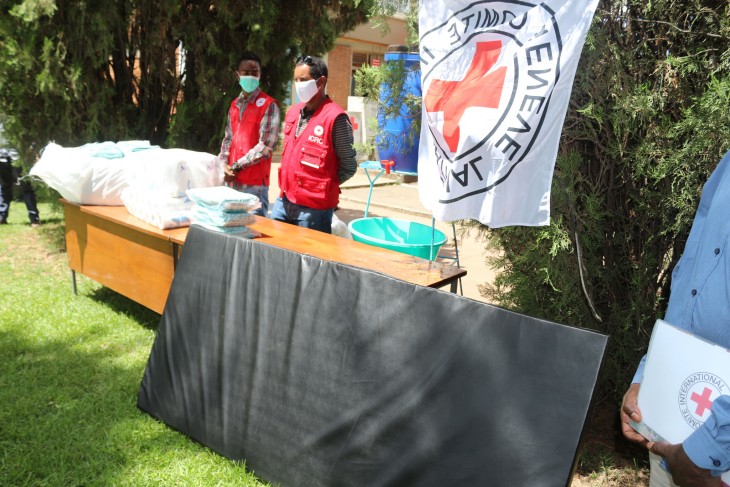
Humanitarian action is also being adapted. In response to the pandemic, the International Committee of the Red Cross (ICRC) has transformed its activities in the East and Horn of Africa. In Ethiopia, it has supplied infection prevention and control items to vulnerable people and promoted health and hygiene. In Kenya, it has worked – together with the Kenyan Red Cross Society and the Kenyan Prison Service – in 48 men’s, women’s and juvenile prisons, to prevent and mitigate the effects of COVID-19. Similar activities have been organized and implemented with urgency across the region and around the world.
At the same time, persistent humanitarian needs that were identified before COVID-19, or that arise concurrently, must be addressed. In addition to its ongoing protection, health, water, habitat, sanitation and other activities, the ICRC continues to work for the promotion of international humanitarian law (IHL). As the guardian of IHL, mandated by the community of States to work for its ‘faithful application’, the ICRC steadfastly pursues the ratification of, accession to and implementation of IHL-related legal instruments. It continues, in the context of its confidential bilateral dialogue, to persuade the parties to armed conflict to abide by their fundamental obligations for the benefit of the victims of armed conflict.
Importantly, IHL requires respect, protection and care for the sick and facilitates the functioning of medical services. It provides a framework for the protection of those who are particularly vulnerable, such as internally displaced persons, migrants – including asylum seekers and refugees – and persons deprived of their liberty. IHL protects items essential to human survival, such as water, and foresees humanitarian access, creating space for impartial humanitarian actors to provide relief to those in need. In sum, IHL provides crucial safeguards during pandemics.
Despite the challenges of the last year, between August 2019 and July 2020, States of the East and Horn of Africa have continued to express their commitment to IHL through concrete action. Following South Sudan’s accession in June 2019, Somalia and Ethiopia have also become party to the African Union Convention for the Protection and Assistance of Internally Displaced Persons in Africa. In doing so, these States celebrate ten years since the adoption of this unique, progressive instrument: the first binding international agreement in respect specifically of internally displaced persons, which, amongst many other things, reflects and recalls IHL.
In the same period, Rwanda finalized its ‘Harmonization Study’: an ambitious and comprehensive account of the country’s participation in IHL-related international legal instruments and their domestic implementation. South Sudan made a voluntary report under the Convention on Cluster Munitions, highlighting measures that it had taken to decontaminate unexploded ordinances. Tanzania became the first State in the East and Horn of Africa to sign the Treaty on the Prohibition of Nuclear Weapons, which binds it to refrain from acts that would defeat the object and purpose of this critical, fundamentally humanitarian treaty.
In December 2019, States and National Red Cross and Red Crescent Societies attended the 33rd International Conference of the Red Cross and Red Crescent, adopting a ‘roadmap for better national implementation of IHL’, which provides a ‘blue-print [for] States’ to ensure that the armed forces, civil servants, parliamentarians, judges and / or National IHL Committees can strengthen the national implementation of IHL. It invites States to, amongst other measures, conduct compatibility studies and adopt appropriate law, ratify / accede to relevant international instruments, integrate IHL into military practice, disseminate IHL and share best practice.
In domestic law too, States of the East and Horn of Africa have also progressed on IHL. National law and other implementation measures are being drafted and discussed, including on the use and protection of the red cross, red crescent and red crystal emblems. IHL has also been considered and incorporated into counter-terrorism laws, protecting impartial humanitarian actors against the risk of sanction for the conduct of their usual, otherwise-lawful activities (For more information on this topic, see International Humanitarian Law and the Challenges of Contemporary Armed Conflicts, Chapter 5).
In 2019, governments, practitioners and scholars were commemorating the 70th Anniversary of the Geneva Conventions: the universally ratified cornerstone of contemporary IHL. This year, focus has turned to the law’s role in the context of complex, multifaceted emergencies. This fundamental change mirrors the rapid evolution of the past 12 months and the urgent re-alignment of priorities at both the national and international levels.
The constant, however, is IHL’s enduring relevance in contemporary armed conflicts: protecting persons not or no-longer taking direct part in hostilities and limiting the means and methods of warfare. Perhaps now more than ever, IHL, robustly and comprehensively implemented, is critical in conflict and pandemic-affected contexts.